7 Top Tech News Stories This Week: GTA 6 Extended Look, Meta Settlement, and More

Navigating Tech’s Next Phase: Strategic Shifts in Social Media Governance, Apple Silicon, and Mobile Hardware
The technology industry is undergoing a notable realignment, marked by regulatory compromises, substantial architectural shifts in consumer desktop computing, and renewed interest in purpose-built hardware. From legal resolutions surrounding social platform design to hardware announcements across desktop silicon, adventure wearables, and simplified mobile devices, recent developments highlight how tech companies are adapting to changing market demands and regulatory pressures.
Meta’s $18 Billion Settlement Signals a Shift in Platform Accountability
In one of the most significant legal outcomes for the social media sector to date, Meta has agreed to pay $18 billion to settle a landmark lawsuit brought by state Attorneys General. The lawsuit alleged that the company intentionally engineered features across Instagram and Facebook to addict teenage users, potentially causing psychological harm. While Meta accepted the financial settlement without admitting wrongdoing or legal fault, the agreement imposes structural operational obligations that could alter how social platforms manage younger audiences.
As part of the settlement, Meta has committed to implementing several self-imposed platform modifications. These include options to hide like counts on teenage users’ profiles, providing an optional algorithm-free feed, and introducing a cumulative two-hour daily time limit across Instagram and Facebook. Notably, Meta indicated that this daily limit could be reduced to one hour if competing platforms—specifically TikTok, Snap, and YouTube—adopt similar self-regulatory measures.
The practical significance of this settlement extends beyond its monetary value. While $18 billion represents a substantial payout, it allows Meta to avoid potentially catastrophic damages that could have threatened its broader financial standing. For regulators, the outcome establishes a precedent for tying platform features—such as algorithmic recommendation feeds and engagement metrics—directly to corporate accountability. However, observers remain divided on whether these voluntary operational changes will meaningfully curb platform overuse or merely represent an incremental compromise in user experience design.
Apple Expands Desktop Silicon Capabilities and Prepares for Leadership Shift
Apple has updated its compact desktop line with the introduction of its second-generation redesigned Mac Mini, offering refreshed internal components aimed at entry-level users and high-demand professionals alike. Retaining the compact enclosure introduced in its prior M4 redesign, the updated desktop hardware shifts to Apple’s newest processor architectures, featuring the baseline M6 chip—Apple’s first built on a 2-nanometer process—and the higher-tier M5 Pro processor.
The inclusion of 2-nanometer architecture in the M6 model represents a notable manufacturing step forward, promising enhanced efficiency and computing density within the small form factor. Alongside performance increases, Apple has adjusted its pricing structure, raising entry-level costs in key markets compared to previous hardware cycles.
Mac Mini Processor and Pricing Configurations
To evaluate the structural shifts in Apple’s compact desktop portfolio, the following breakdown outlines the hardware specifications and baseline pricing across both chip configurations announced for the platform.
| Specification / Feature | Mac Mini (M6 Chip) | Mac Mini (M5 Pro Chip) |
|---|---|---|
| Processor Technology | 2-nanometer M6 Architecture | M5 Pro Architecture |
| Base Memory (RAM) | 16GB | 24GB |
| Base Solid-State Storage | 256GB | 512GB |
| Starting Price (US) | $899 | $1,699 |
| Starting Price (UK) | £899 | £1,699 |
| Starting Price (Australia) | AU$1,449 | AU$2,699 |
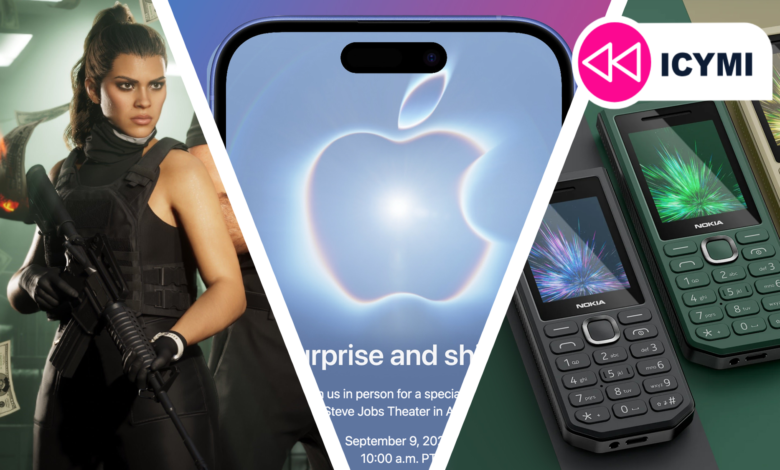
Beyond immediate hardware releases, Apple has formally scheduled its upcoming media event for September 9 at 10 AM PST, themed “Surprise and Shine.” The event carries added significance as it marks the first major keynote presented under newly appointed CEO John Ternus. Among expected announcements, attention is focused on the potential introduction of the long-rumored folding smartphone, designated as the “iPhone Ultra,” alongside updates to mainstream product lines including the iPhone 18 Pro series, Apple Watch Series 12, an updated HomePod mini, and a refreshed Apple TV media box.
Specialized Wearables and Utility Hardware Target Distinct Niche Markets
While mainstream personal technology focuses on higher processing speeds and platform integration, specialized hardware continues to pivot toward practical outdoor utility and digital disconnection. In the adventure technology segment, Garmin launched its Fenix 9 and Fenix 9 Pro flagships, introducing dedicated software and physical features tailored to field environments following testing on a 12 km trip in the French Alps.
Key updates in the Fenix 9 series include ‘Garmin Epic’, a feature engineered to consolidate tracking metrics and physical performance stats across multi-day wilderness trips and backpacking excursions. Additionally, the Fenix 9 Pro incorporates a specialized green LED illumination feature, designed to preserve night vision during low-light camping operations without relying on high-intensity white light.
Concurrently, HMD Global has expanded its Nokia feature phone portfolio with the introduction of the Nokia 300 Charge. Rejecting touchscreens, complex operating systems, and application ecosystems, the device emphasizes basic mobile utility and emergency functionality. The 300 Charge incorporates a high-power LED flashlight alongside a power bank mode, enabling users to reverse-charge external electronics through a standard USB-C connection.
This approach highlights a growing divergence in hardware design strategies: while primary mobile devices double down on processing power and cloud connectivity, secondary utility devices are increasingly positioned as reliable tools for travel, outdoor survival, or intentional digital detoxing away from constant social feeds.
Interactive Media and Gaming Hardware Reach New Benchmarks
The interactive entertainment sector also registered significant activity, driven by industry trade showcases and long-term project reveals. At Gamescom, major announcements spanned software expansions and extreme hardware displays, including the first official reveal of The Witcher 3: Songs of the Past DLC, alongside specialized gaming hardware such as an 1100Hz OLED gaming monitor and a collaborative IKEA x Xbox home setup line.
In parallel, Rockstar Games unveiled an Extended Look at Grand Theft Auto 6, offering a deeper view of mechanics and engine rendering capabilities. The footage showcased real-time character switching, updated atmospheric lighting models, high-density traffic scenes, dynamic car chases, and expanded police response systems featuring the return of the classic six-star wanted rating. The demonstration provided clear evidence of how next-generation console hardware is being leveraged to handle complex simulation systems and expansive open-world environments.
Implications for the Broader Technology Landscape
Taken together, these developments illustrate an industry balancing multiple competing forces. Legal actions against social media providers demonstrate that regulatory scrutiny over platform safety and user engagement is transitioning into binding financial and operational mandates. At the same time, hardware manufacturers are refining their strategies across opposite ends of the technological spectrum—pushing desktop computing boundaries through 2-nanometer architecture while maintaining demand for simple, single-purpose utility devices.
As tech platforms navigate evolving legal boundaries and rising component costs, consumers face an ecosystem marked by higher entry prices for premium hardware alongside expanding choices for specialized gear tailored to specific lifestyle needs.