The Definitive Guide to Curtain Lengths: How to Measure, Choose, and Hang Window Treatments
Window treatments play a dual role in interior design, operating simultaneously as essential architectural elements and functional utilities. When selected thoughtfully, curtains introduce texture, color, and visual proportion to a living space. Beyond aesthetics, they serve as a practical barrier that regulates incoming sunlight and manages thermal energy transfer between a room and the outdoors. However, achieving both aesthetic appeal and practical performance depends heavily on selecting the correct curtain length and hanging hardware.
Choosing an inappropriate drape size can disrupt the visual balance of a room or compromise the functionality of the window. A curtain that is too short can make ceilings feel low and windows appear truncated, while excessively long fabric in heavy-traffic areas can present upkeep challenges. Understanding how different drape styles interact with window proportions, wall heights, and room functions allows homeowners to make informed purchasing and installation decisions.
Visual Impact and Environmental Control: Long vs. Short Curtains
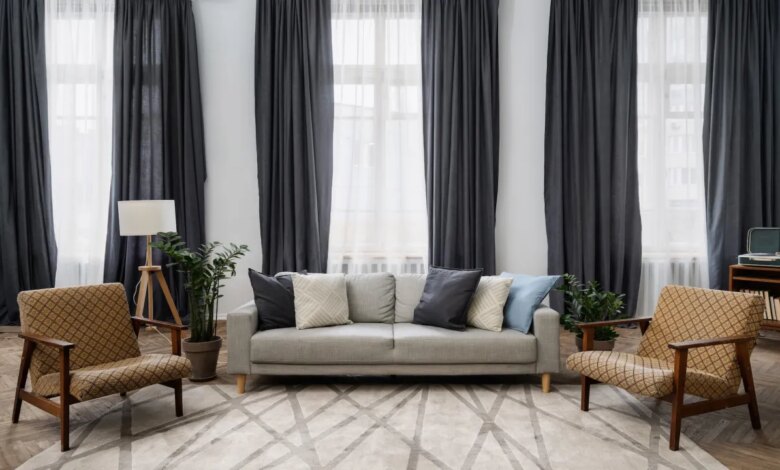
The vertical span of a window treatment fundamentally alters how a space is perceived. Longer drapes that extend from high on the wall down to the floor create a sense of verticality, drawing the eye upward and imparting a sense of formality. Because of this dramatic sweeping effect, floor-length options are frequently selected for primary living areas and formal dining rooms.
The functional implications of longer drapes are equally significant. When constructed from dense, heavy fabrics, full-length curtains establish an insulating layer over the window opening. This thermal barrier restricts heat transfer, helping to mitigate solar heat gain during summer months and potentially lowering cooling costs. Additionally, extended panels provide superior light blockade and privacy, shielding interior spaces from outside view.
Conversely, shorter curtain panels establish a more relaxed, informal atmosphere. Typically utilized in utility spaces such as kitchens, laundry rooms, or secondary work areas, shorter treatments favor practicality over drama. These designs often utilize lighter, more pliable textiles that permit filtered daylight to pass around the edges or through the fabric itself. While shorter styles enhance accessibility around counters or fixtures, their reduced coverage means they provide less insulation against heat gain compared to full-length thermal drapes.
Standard Curtain Dimensions and Sizing Standards
Ready-made curtain panels are generally manufactured in standardized vertical lengths to accommodate common ceiling heights and window configurations. Knowing these industry-standard measurements simplifies the selection process for standard double-hung or picture windows.
While the most ubiquitous standardized lengths range from 63 inches to 120 inches, certain specialty manufacturers offer intermediate sizes such as 72 inches, though these are less common. The decision to select a particular length depends on both the room’s structural clearance and the intended visual outcome.
| Window Coverage Goal | Standard Curtain Length |
|---|---|
| Cover a standard double-hung window | 63 inches |
| Cover the window to just above the floor | 84 inches |
| Cover the window and rest on the floor in an 8-foot-tall room | 96 inches |
| Cover the window to just above the floor in a 9-foot-tall room | 108 inches |
| Cover the window and rest on the floor in a 9-foot-tall room | 120 inches |
Measuring Windows for Accurate Curtain Fit
Determining the correct curtain panel dimensions requires systematic measurement prior to purchasing hardware or fabric. The measuring process is broken down into two distinct phases: determining vertical drop height and calculating required horizontal width.
Calculating Vertical Height
Before measuring vertical distance, the placement of the curtain rod must be established. Mounting hardware position varies according to room dimensions:
- Standard Ceiling Heights (8 Feet): Mounting the curtain rod close to the ceiling line creates the illusion of additional ceiling height and maximizes vertical expanse.
- Elevated Ceiling Heights (9 Feet or Higher): Mounting the hardware approximately 12 inches above the top of the window frame maintains balanced proportions without over-extending the wall space above the window.
Once the intended hardware location is identified, measure straight down from the top of the rod location to the exact point where the fabric hem should terminate. When taking this measurement, account for any drop distance introduced by hanging accessories, such as curtain rings or clips, which naturally lower the top edge of the fabric panel below the rod itself.
Calculating Panel Width
To ensure that curtains provide full coverage when closed and frame the window gracefully when drawn open, the curtain rod must extend beyond the window casing. Adding 8 to 12 inches of width to both the left and right sides of the window frame—totaling an extra 16 to 24 inches of rod length—allows drawn panels to rest against the surrounding wall rather than obstructing incoming sunlight.
For example, a window frame measuring 36 inches across requires a hardware span between 52 and 60 inches. To achieve full, attractive gathering when the drapes are fully drawn, the total combined width of all curtain panels should equal at least twice the width of the window frame.
Evaluating Curtain Length Styles Across Home Spaces
Curtain lengths fall into four recognized operational classifications, each suited to specific room functions, maintenance profiles, and structural layouts.
Café Curtains
Café curtains cover only the lower section of a window frame, leaving the upper portion exposed to natural daylight. Frequently fabricated from sheer or lightweight textiles, café styles provide baseline privacy while maintaining bright interiors. They are particularly well-suited for ground-floor spaces, bathrooms, kitchens, and laundry areas where light entry is essential but screening from street view is required.
Apron Curtains
Apron curtains span the entire window frame but terminate slightly below the bottom trim line or window sill. This style offers a practical solution for spaces where radiators, furniture pieces, or desk counters sit directly beneath the window. Commonly installed in bedrooms or informal living spaces, apron drapes deliver complete window coverage without interfering with underlying furnishings.
Floor-Length Curtains
Floor-length drapes drop continuously from the upper hardware placement to either graze the floor surface or hover less than an inch above it. This style represents a versatile approach suitable for formal living spaces, master suites, and primary dining rooms. By utilizing multiple layered panels or dense textiles, floor-length installations enhance vertical balance and deliver reliable privacy and thermal insulation.
Puddle Curtains
Puddle curtains feature several extra inches of fabric length that pool gracefully onto the floor surface. This arrangement creates a opulent visual effect that complements formal period architecture or classic interior design schemes. However, because the extra fabric rests directly on the floor, puddle drapes easily collect dust, pet hair, and debris. They require frequent handling and maintenance, making them unsuitable for households with young children, free-roaming pets, or heavy foot traffic.
Addressing Non-Standard Windows and Custom Solutions
Standard off-the-rack curtain dimensions do not fit every architectural setup. When window openings, trim work, or ceiling heights deviate from conventional builder standards, custom options provide a precise tailored fit. Homeowners seeking specialized textiles, custom light-filtering backings, or complex installation support can work directly with interior designers who manage sample selection, precise site measurements, and final installation.
For individuals taking a hands-on approach to home projects, custom window treatment providers like Hunter Douglas or The Shade Store offer direct ordering based on self-reported dimensions. When standard panel sizes fall between exact requirements, purchasing a longer panel size remains the safer approach. Excess fabric length can easily be adjusted upward by altering hardware placement or shortened using hem tape or custom tailoring. Conversely, panels that are manufactured too short cannot be extended without sacrificing the integrity of the design.
Essential Installation Checklist and Avoidable Errors
Achieving a professional-looking installation requires avoiding common measurement and mounting mistakes. Implementing these practical checks ensures clean execution:
- Measure Floor Variances: Take vertical height measurements at multiple points across the window span. Floors and ceilings are rarely perfectly level, and accounting for slight elevation shifts prevents lopsided hems.
- Factor Hardware Clearances: Always calculate how much vertical space hanging rings, hooks, or specialized grommets add between the rod centerline and the fabric top line.
- Verify Mounting Coordinates: Re-confirm hardware mounting height and total drape drop length before drilling pilot holes or installing bracket fasteners into wall anchors.
- Err on the Side of Extra Length: Choose longer panel options over shorter variants whenever off-the-shelf sizing does not precisely match design requirements, as excess material can be hemmed.