Understanding Attic Bat Exclusion: Identification, Legal Requirements, and Decontamination
Discovering that bats have taken up residence inside a home’s attic or roof eaves can be alarming. Beyond the initial disturbance, an unresolved bat infestation can lead to structural fouling and health hazards from accumulated droppings. Resolving a bat issue, however, requires a specific approach: physical eradication is neither effective nor legally permissible in most circumstances. Instead, proper bat management relies on structural exclusion—blocking access points while allowing existing bats a clear route to leave.
Because bats perform vital ecological functions, such as keeping insect populations in check, long-term wildlife management focuses on encouraging them to relocate outdoors—potentially into a dedicated bat house—rather than harming them. For homeowners addressing a bat presence, practical remediation involves moderate effort, typically requiring one to three hours of total project time (with one to two hours of active labor) and material costs ranging from $35 to $150. However, executing this process safely requires careful attention to seasonal rules, structural entry points, and health precautions.
Identifying Common Colonizing Bat Species
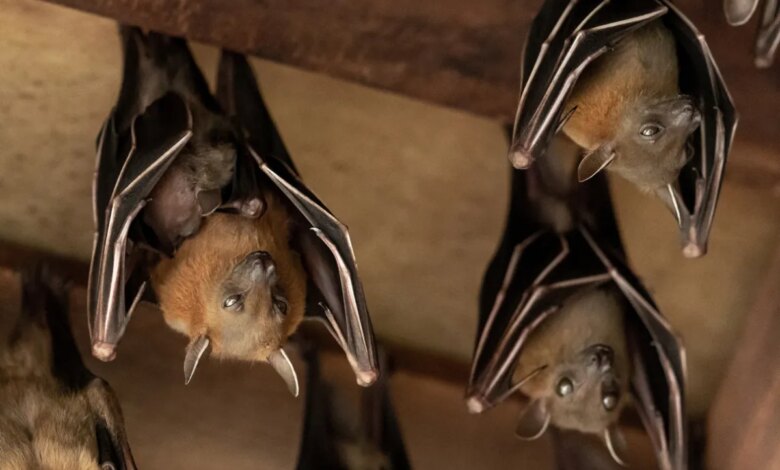
Although the United States is home to nearly 50 distinct bat species, only colonizing varieties seek shelter inside human structures like attics, eaves, and wall cavities. Non-colonizing bats generally roost individually in trees or foliage. Determining which species has entered a building is an essential first step, as species identity influences legal protections, seasonal behavior, and exclusion timing.
Observing bats around dusk or dawn provides the best opportunity to examine their physical characteristics as they leave or return to roosting sites. Comparing visual observations with species common to the region helps establish which bat type is present.
| Species & Scientific Name | Physical Characteristics | U.S. Geographic Range |
|---|---|---|
| Big brown bat (Eptesicus fuscus) |
Shiny brown fur with dark brown-to-black wings, ears, feet, and facial features. | Distributed throughout the entire United States. |
| Little brown bat (Myotis lucifugus) |
Visually similar to the big brown bat, but smaller in overall size with a noticeably pointier nose. | Found across most of the country, excluding parts of the Southeast and a central corridor stretching from Texas to Nebraska. |
| Pallid bat (Antrozous pallidus) |
Features pale fur, broad ears, a pinkish face, and eyes that are visibly larger than those of most other domestic bat species. | Concentrated primarily across the western third of the United States. |
| Mexican free-tailed bat (Tadarida brasiliensis) |
Displays dark brown to gray fur with a distinct tail section extending beyond the tail membrane. | Predominantly located across the southern region of the United States. |
Navigating Maternity Seasons and Wildlife Regulations
Once the species is identified, timing becomes the critical operational constraint. Most native bat species are protected by state or federal laws, making it illegal to poison, trap, or kill them. Lethal methods—such as using firearms, chemicals, or lethal traps—violate wildlife protection statutes and fail to solve underlying structural entry issues.
Furthermore, exclusion tactics cannot be implemented during the bat maternity season. For most U.S. species, maternity season spans from May 1 through August 31, though precise dates vary by regional climate and specific species. During this period, female bats form nursery colonies to raise flightless offspring. Installing exclusion devices while young bats are incapable of flying locks the babies inside. This results in the death of the juvenile bats, creating secondary odor and sanitation problems, and may violate wildlife conservation laws. Unless local authorities grant a specific exception, physical exclusion must wait until young bats are fully fledged.
In some cases, seasonal migration simplifies the timeline. Species that migrate south for the winter vacate attics naturally during colder months. This seasonal absence provides an ideal opportunity to complete structural repairs and seal entry points without the risk of trapping animals inside.
Locating Entry Points and Assessing Home Vulnerabilities
Bats can compress their bodies to slip through structural openings as small as one-half inch to one inch wide. Consequently, identifying every potential breach around the building envelope is necessary before attempting exclusion.
Effective inspection requires monitoring the exterior perimeter of the home during peak activity windows at dawn and dusk. Because a single colony frequently utilizes multiple access points, inspectors should examine several architectural features:
- Roofing elements: Ridge caps, fascia boards along eaves, and damaged flashing.
- Ventilation pathways: Unscreened attic louvers, soffit vents, and chimney flues.
- Structural deterioration: Warped exterior trim, loose or sagging siding, and cracked or broken window panes.
Dark stains or accumulations of bat droppings (guano) around an exterior gap offer clear evidence of an active flight path. When entry points are difficult to locate visually, applying a light dusting of flour or baby powder around suspected gaps before dusk can reveal tracks or smudges left by bats exiting the structure.
Implementing Exclusion and One-Way Exit Devices
Successful exclusion balances sealing static gaps with providing a temporary exit route. Because bats do not possess gnawing teeth like rodents, they cannot chew through structural repair materials. Filling unused cracks with durable compounds such as caulking (for instance, DAP Elastopatch) or polyurethane expanding foam (such as Great Stuff Gaps and Cracks) permanently prevents re-entry.
However, main access gaps must be fitted with a specialized one-way exit device. These valves or nets permit bats to drop out of the building to forage but prevent them from finding leverage to climb back inside. To ensure every colony member has left the structure, one-way exit devices should remain installed and monitored for at least three days before being removed and replaced with permanent sealant.
Decontamination Protocols and Histoplasmosis Prevention
Removing the animals resolves only half of the structural problem. Roosting colonies leave behind concentrated deposits of guano and urine, which pose severe biological hazards if handled improperly. The primary health risk associated with bat guano is Histoplasma capsulatum, a environmental fungus that thrives in accumulated droppings. Inhaling airborne fungal spores can cause histoplasmosis, a serious and potentially life-threatening lung infection.
Anyone entering an affected space to clean must strictly adhere to protective protocols:
- Personal Protective Equipment (PPE): Wear full-coverage clothing with long sleeves, heavy rubber work gloves, and a properly fitted N95 respirator mask. Standard paper dust masks do not filter microscopic fungal spores.
- Airborne Dust Suppression: Before disturbing dry droppings, gently mist the entire contaminated area with a fine water-and-bleach spray. Dampening the material prevents infectious spores from becoming airborne during removal.
- Material Disposal: Remove and safely discard contaminated porous items, such as attic insulation, fabric, or cardboard boxes, that have absorbed waste liquids.
- Surface Cleaning: Scrub hard structural surfaces thoroughly using non-ammonia soap or detergent. Ammonia should be avoided, as mixing it with residual urine or bleach produces toxic fumes.
- Disinfection: Rinse the area with clean water, then apply a final sanitizing solution containing 1/4 cup of household liquid bleach per gallon of water. This concentration kills remaining pathogens and eliminates lingering odors.
If an attic space exhibits widespread contamination or restricted access, hiring a licensed professional restoration crew equipped for hazardous biohazard removal is recommended.
Health Safeguards, Prevention, and Deterrents
In addition to respiratory hazards from guano, bats are known vectors for the rabies virus. Direct physical contact with a bat warrants immediate attention. Because bat teeth are small and bites may go unnoticed—especially if a bat is discovered in a room with a sleeping person or young child—a healthcare provider should be consulted immediately to determine whether post-exposure rabies prophylaxis is necessary.
For outdoor areas or secondary non-structural spaces like fruit trees, alternative non-lethal deterrents can reduce bat activity. Visual and auditory stimuli—such as reflective Mylar balloons, foil strips, hanging mirrors, old CDs, wind chimes, or ultrasonic emitters—help repel bats from outdoor fruit crops. Additionally, intense artificial lighting and strong scent repellents like eucalyptus, cinnamon, white phenol, or mothballs are frequently used to discourage bats from gathering in unsealed semi-enclosed structures.
Discovering a single bat inside a living space often suggests that a larger colony is residing in adjacent wall voids or attic cavities. Performing a thorough exterior evaluation, adhering to seasonal exclusion windows, sealing small structural gaps, and following rigorous cleaning protocols ensures the home remains structurally sound, hygienic, and free of unwanted winged occupants.